At-Home Testing for HIV

An HIV self-test is a test you can do at home or in any private, comfortable space. OraQuick In-Home HIV Test is currently the only HIV self-test approved by the U.S. Food and Drug Administration (FDA). You can order a free test through the Together TakeMeHome program.

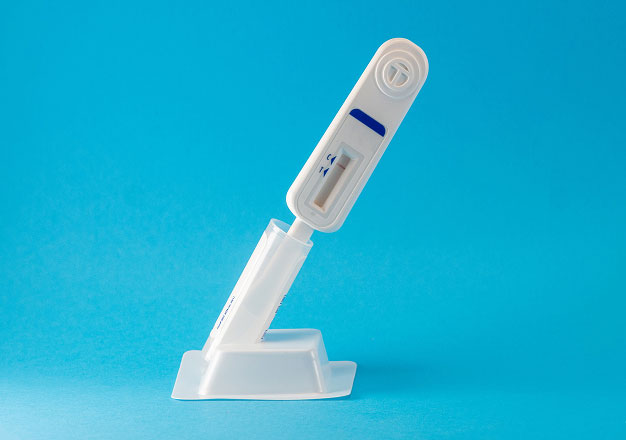
An at home HIV test, displayed at an angle against a bright blue background.

For this test, you will use a swab to collect samples of oral fluid (spit and saliva) from your gums. When using an at-home test, be sure to refer to the instructions for sample collection and performing the test.

The test looks for antibodies, which are proteins your body makes to fight infections like HIV. You can get results in about 20 minutes. It can be your first step to learning your HIV status. However, this kind of test usually can’t detect HIV infection until at least three months after exposure. If your exposure was less than three months ago, a blood test may detect infection sooner.

Positive result: If you test positive on a self-test, it may mean that you have an HIV infection. False positive test results are also possible. It’s important to follow up with a health care provider for additional testing, performed in person by a laboratory using a blood sample, to confirm your HIV status. Find an HIV testing location near you.

Negative result: A negative result may mean you do not have HIV infection, but it could also mean your body hasn’t yet developed antibodies for the test to detect HIV infection, also known as the window period. If you test negative and you have had a possible exposure to HIV within the last three months, be sure to make an appointment for HIV testing with a health care provider.

Invalid result: If the test result is unclear or the control line doesn’t appear, the test is invalid. We recommend you take another self-test or talk to a health care provider to get tested.

If you think you may have been exposed to HIV within the last 72 hours, you should take PEP (post-exposure prophylaxis) as soon as possible. PEP is a course of medication (anti-retroviral tablets) that can prevent HIV infection. You can get a prescription for PEP from a health care provider, a community health center, an urgent care center, or a hospital emergency room.

Icon: Map Locator

Looking for sexual health services?

Find low- to no-cost sexual health services near you, like PrEP, STI testing, and more on the Service Locator Map.

Icon: Checkmark

Is PrEP right for you?

PrEP is a medication that helps prevent HIV. Take a short quiz to find out if it may be right for you.

Logo: Care That Fits You

Logo: Massachusetts Department of Public health

Brought to you by Massachusetts Department of Public Health Copyright © 2026

Logo: Care That Fits You

Logo: Massachusetts Department of Public health
Brought to you by Massachusetts Department of Public Health Copyright © 2026